When a roof tear-off leaves shingles, nails, and tar paper scattered, a roofing debris removal service steps in to contain, load, and haul everything away. In simple terms, it’s a specialized cleanup crew that works alongside your roofer to keep the site safe, sweep for nails, and manage disposal or recycling so your project can move from demo to done. San Luis Obispo Junk Removal coordinates timing with your tear-off and provides the right equipment for tight drives, hillsides, and coastal winds common in the area.
Key Takeaways
- A roofing debris removal service contains, loads, sweeps, and removes shingles and related tear-off waste so your new roof can proceed quickly.
- Hazardous materials, permits, access limits, and weather can affect what’s included and when service occurs.
- Choose the right setup—haul-away trucks, dumpsters, or bag solutions—based on roof size, schedule, and space.
- Ask for disposal documentation to confirm responsible handling and recycling where available.
- Good staging with tarps, boards, and clear drop zones protects lawns, drives, and neighboring properties.
The roof is off. The yard looks like a storm hit. You can smell tar in the air and see nails that glint in the sun. This is the moment when a clean, safe plan matters. That is where a roofing debris removal service steps in to help finish the job.
A roofing debris removal service is a cleanup crew that contains, loads, and hauls away shingles and tear-off waste from your roof project. The team keeps the site safe, sweeps up nails, and handles disposal or recycling so you can wrap up work fast and protect your property.
Local crews schedule around your tear-off, match the right truck or dumpster, and provide disposal documentation. San Luis Obispo Junk Removal works across San Luis Obispo every week to help contractors, property owners, and homeowners move from demo to done with less stress.
Service is available throughout the local area.
Table of Contents
- What a Roofing Debris Removal Service Actually Covers
- What’s Not Included: Limits, Safety Rules, and Site Conditions
- Service Models Explained: Haul‑Away Trucks, Dumpsters, and Bag Solutions
- Sorting, Recycling, and Responsible Disposal
- Pricing and Estimates: How Costs Are Calculated
- Prepare the Job Site: Before, During, and After Pickup
- How to Choose a Provider and What to Ask
- Frequently Asked Questions
- Key Takeaways
- Conclusion
What a Roofing Debris Removal Service Actually Covers
A good crew shows up ready to work around your roofer’s timeline. They plan safe access, bring tarps, and stage gear. The goal is simple: keep debris contained, load it fast, and leave the ground clean. This service supports the tear-off so your new roof can go on without delay.
Common Materials Handled: Shingles, Underlayment, Flashing, Nails, and Wood
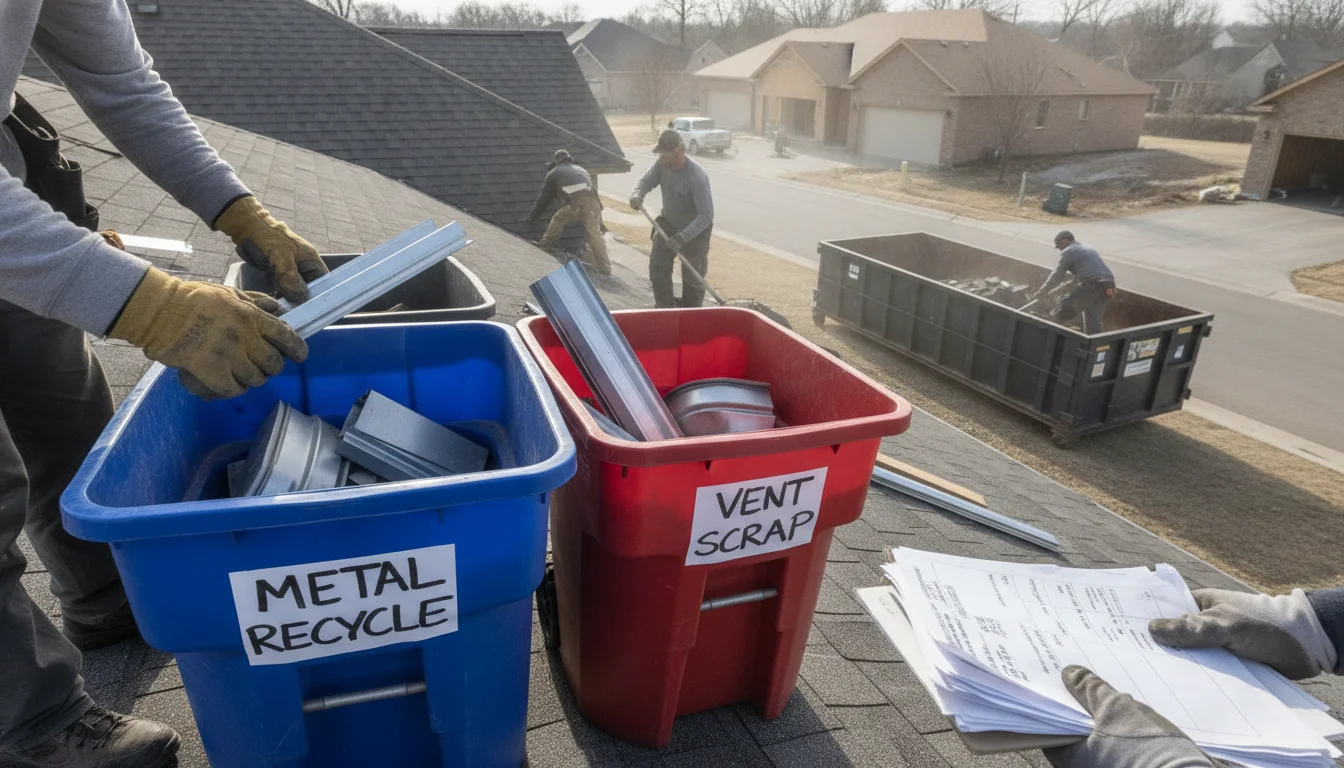
Teams load asphalt shingles, tile fragments, underlayment, felt, drip edge, flashing, vents, and wood from decking cuts or fascia work. They also gather loose nails, staples, and plastic wrap from bundles. If gutters were removed, sections and hangers are included. Crews sort out obvious metal so it can be recycled. They keep an eye out for hidden shards that can harm tires or feet.
On‑Site Process Overview: Containment, Loading, Sweeping, and Final Walkthrough
Crews first set ground protection and tarps. They stage cans, bags, or a dumpster near the drop zone. During tear-off, they clear piles often so waste does not build up. After loading, teams use magnet sweepers to pull nails from grass, beds, and driveways. A final walkthrough checks downspouts, patios, and fence lines. You get a site that is broom-swept and safe for the next step.
What’s Not Included: Limits, Safety Rules, and Site Conditions
There are clear safety lines. A debris crew is not a roofing installer and does not repair decking. They also do not handle items that need special permits or hazmat rules. Setting fair limits keeps the site safe and the schedule steady.
Hazardous Materials and Special Handling Exceptions
Most providers cannot take liquid tar, lead paint chips, asbestos materials, fuel, solvents, or pressurized tanks. If you suspect asbestos in old felt or mastic, that needs licensed abatement. Moldy or biohazard waste needs special handling, too. Batteries, TVs, and some appliances follow e‑waste rules. Ask in advance so plans can be made for safe removal.
Permits, Weight Limits, Access Constraints, and Weather Delays
Street placement of a dumpster may need a local permit. Weight caps apply to dumpsters and trucks, which can fill by weight before volume. Tight alleys, low trees, or steep drives can limit access or change equipment choices. Severe weather can pause hauling for safety. Crews follow housekeeping rules for active sites under OSHA 1926 standards for debris control and safe walkways (OSHA 1926.25).
Service Models Explained: Haul‑Away Trucks, Dumpsters, and Bag Solutions
You can match the service model to your job’s size, speed, and space. Some projects need tight, same‑day turnaround. Others need an on‑site container for a few days. The right fit reduces mess and keeps the crew moving.
When Each Option Fits Your Project Scope and Timeline
- Haul‑Away Trucks: Best for fast tear‑offs, limited space, or HOAs. Crews load and go, often same day. No container sits on the drive.
- Dumpsters: Good for multi‑day work or larger roofs. You can load as you go. Check weight caps for heavy shingles.
- Bag Solutions: Useful for small patches or light repairs. Bags must be staged close to the curb for pickup.
Coordinating With Roofers: Tear‑Off Phases, Timing, and Staging
Plan the container drop before demo. Stage it near the primary drop zone with clear paths. Keep a tarp runway to protect pavers. For two‑day jobs, schedule a mid‑project swap. Share start times, crew size, and roof type so the hauler can match trucks. Good staging keeps shingles off lawns and helps the magnet sweep at the end.
Sorting, Recycling, and Responsible Disposal
Responsible handling helps protect the community. Many areas accept asphalt shingles for recycling into road mix. Metal vents and flashing can go to scrap. Crews separate materials where it is safe and practical, which can improve diversion rates and reduce landfill use.
Asphalt Shingle Recycling, Metal Recovery, and Diversion Rates
Shingle recyclers grind material into Reclaimed Asphalt Shingles (RAS) that may be used in pavement mixes in many states. The EPA outlines practices for sustainable handling of construction and demolition debris, including shingles (EPA C&D Materials; EPA Asphalt Shingles). Metal flashing, drip edge, and vents are high‑value recyclables. Clear sorting on site improves diversion while keeping the work area safe.
Disposal Documentation: Tickets, Weight Slips, and Chain of Custody
Ask for scale tickets, landfill receipts, and recycling logs. These show weights and types of waste received. A simple chain of custody—who generated, hauled, and disposed—helps with warranties, insurance, or city rules. For commercial jobs, keep copies with project files. This record is useful if you manage many properties or bid public work.
Pricing and Estimates: How Costs Are Calculated
Costs vary by debris volume, weight, location, and access. Crews may quote by truck load, dumpster size, or a mix of factors. The roofing type matters because shingles are dense. Access and schedule needs can also affect the plan. Clear scope means smoother service and predictable timing.
Volume, Weight, Roofing Type, and Contamination Factors
Asphalt shingles are heavy. A roof that looks small can still weigh a lot. Wood shakes and tile fragments add weight fast. Wet debris is heavier than dry. Mixed waste with drywall, dirt, or bricks may need different handling. Clean loads of shingles are often easier to process than mixed loads with yard waste and trash.
Travel Distance, Minimums, Access Fees, and Overages
Longer drives add time. Some providers set minimum service levels or charge for return trips. Tight sites that need extra labor, shuttle loads, or hand‑carry work may change the plan. Exceeding a dumpster’s weight cap can lead to overage charges. Share site photos and details so your estimate reflects real‑world conditions in your area and nearby neighborhoods.
Prepare the Job Site: Before, During, and After Pickup
Good prep keeps nails off lawns and cars safe in the drive. Small steps also help your roofer and hauling crew move faster. Plan parking, protect sensitive areas, and agree on the drop zone before the first shingle comes down.
Staging and Containment: Chutes, Tarps, and Ground Protection
Lay tarps below eaves and stack plywood where crews step on grass. A chute from roof to container keeps debris off flower beds. Mark sprinkler heads and low‑voltage lines with flags. Keep walkways clear for wheelbarrows. Set a staging area for metal and wood so sorting is quick and safe. Simple ground rules keep cleanup tight and nails contained.
Protecting Driveways, Lawns, Landscaping, and Neighboring Properties
Use boards under dumpster wheels. Ask crews to raise doors slowly to avoid scraping pavers. Move cars to street parking until the magnet sweep is done. Cover AC units and pools. Let neighbors know your timing so they can plan. A short courtesy note can prevent conflicts and protect nearby lawns and fences during debris runs.
How to Choose a Provider and What to Ask
Pick a team that understands roofing tear‑offs, not just general junk. Look for clear safety steps, fast response, and proof they handled disposal the right way. Local knowledge helps with permits, weather patterns, and traffic windows.
Insurance, Licensing, Safety Training, and Proof of Disposal
Ask for active general liability and workers’ comp. Confirm any required local licenses. Crews should use PPE like gloves, hard hats, and eye protection. Providers should follow OSHA housekeeping and site control standards during cleanup (OSHA 1926.25). Request landfill tickets and recycling receipts with your project name.
Key Questions on Scheduling, Turnaround, and Customer Support
- Can you match my roofer’s tear‑off start and end times?
- What container or truck size do you suggest for my roof type?
- How do you protect driveways and sweep for nails?
- What is the plan if weather delays the tear‑off?
- Will I receive weight slips and disposal documentation?
If you need more than roofing waste hauled, ask about Construction Debris Removal, Commercial Junk Removal, or full‑property options like Junk Removal Services and Attic & Basement Cleanout for larger projects.
Frequently Asked Questions
How long does roofing debris removal take after a tear‑off?
Most single‑family homes finish the same day the roof is stripped. Larger roofs, tight access, or weather may push into the next day. Clear staging, close container placement, and steady loading speed things up. A final magnet sweep and walkthrough wrap the service.
Can shingles be recycled in my area?
In many US markets, yes. Asphalt shingles can become road mix as Reclaimed Asphalt Shingles. Availability varies by county. Ask your provider about local shingle recycling facilities and whether clean loads are required to qualify. Request tickets to confirm responsible handling.
Do crews pick up every nail from my lawn and driveway?
Crews use rolling magnets and visual sweeps to capture loose nails. Most nails are removed, but a few can hide in grass or mulch. Walk the site together at the end. Check driveways, beds, and downspouts. A second pass is common if anything is missed.
Can I place a dumpster on the street without a permit?
Many cities require a permit for street placement. Driveway placement often does not. Rules vary by municipality. Your provider should advise on local steps in San Luis Obispo and help schedule drop and pickup windows that meet neighborhood and HOA rules.
Which service is better: a truck haul‑away or a dumpster?
If space is tight or you want fast removal, a truck haul‑away is great. For multi‑day work or big roofs, a dumpster lets crews load as they go. Your roof type, schedule, and access decide the best fit. A local roofing debris removal service will guide you.
Key Takeaways
- A roofing debris removal service contains, loads, sweeps, and hauls shingles and tear‑off waste.
- Safety and limits apply to hazardous items, permits, access, weight caps, and weather.
- Choose the right model: haul‑away trucks, dumpsters, or bag options for your timeline.
- Ask for documentation like tickets and weight slips to verify responsible disposal.
- Prep the site with tarps, boards, and clear staging to protect lawns and drives.
Conclusion
Your roof project should end with a clean, safe property—not loose nails and piles of shingles. With clear staging, smart equipment, and solid documentation, San Luis Obispo Junk Removal makes cleanup simple across San Luis Obispo and nearby communities—from Downtown SLO and Laguna Lake to Pismo Beach, Morro Bay, Atascadero, Arroyo Grande, and beyond. Ready to schedule roofing debris pickup or plan a dumpster drop for tear‑off day? Contact us.
If you are not sure which of these you are dealing with, it is worth having someone look at it before it turns into a bigger job. Get in touch with San Luis Obispo Junk Removal today and we will tell you where you stand.