To prepare for a retail cleanout, set a clear move or closure date, then sort inventory, fixtures, electronics, and debris. Assign tasks, record what stays or goes, protect the building, and plan safe access for removal crews. A simple plan helps the store finish on time and prevents missed items.
Retail cleanouts can feel stressful. A shop may hold years of work, customer memories, and useful equipment. A calm plan helps owners, managers, and staff make clear choices without rushing.
San Luis Obispo Junk Removal helps businesses plan the removal side of a store move or closure. A good schedule also helps property owners prepare a retail space for its next tenant.
Table of Contents
- What should you do first when preparing for a retail cleanout?
- Which items should be included in a retail cleanout plan?
- How should you sort and document store contents?
- What should you do with retail fixtures and displays?
- How can you handle electronics, lighting, and regulated materials?
- How do you prepare a retail space for junk removal day?
- What should you check after the retail cleanout is complete?
- Key takeaways
- Frequently Asked Questions
- Conclusion
What should you do first when preparing for a retail cleanout?
The first step is to set a firm cleanout timeline around the store move or closure. Work backward from the date when the space must be empty, swept, and ready for inspection. Leave time for sorting, donations, sales, recycling, repairs, and final junk removal.
A cleanout service removes unwanted items from a property and takes approved materials for proper handling. It may include fixtures, broken furniture, cardboard, displays, and other business debris. The exact work depends on the store, building, and items involved.
Set the cleanout timeline around the move or closure
List every major date on one page. Include the last sales day, lease deadline, utility shutoff, fixture removal, final cleanout, and property handoff. A written calendar helps everyone see what must happen first.
The manager should also allow time for late choices. Some items may need approval from an owner, landlord, buyer, or corporate office. A short delay can affect movers, cleaners, contractors, and the next tenant.
Assign responsibilities to store staff and managers
Give each task to one person. One person can lead inventory, another can handle fixtures, and another can manage records. Staff members should know which items they may move and which items need approval.
A manager should keep the final list and answer questions. This reduces duplicate work and keeps useful items from being removed by mistake. San Luis Obispo Junk Removal can help San Luis Obispo businesses plan the removal stage after the store team finishes sorting.
Which items should be included in a retail cleanout plan?
A retail cleanout plan should cover everything that will leave the store. This includes inventory, shelving, racks, counters, signs, office furniture, break-room items, cardboard, and general debris. Writing down each group makes the plan easier to check.
Start with large items because they affect space and access. Then add smaller items that may be hidden in stockrooms, offices, closets, loading areas, and display windows. Walk through the full property before removal day.
Separate fixtures, displays, inventory, and general debris
Use separate groups for items with different next steps. Fixtures may be sold or reused. Inventory may be returned, donated, moved, or discarded. General debris may include damaged boxes, broken shelves, worn mats, and unwanted furniture.
A simple list can include:
- Store fixtures such as racks, shelving, counters, and display cases
- Sales-floor items such as signs, mannequins, stands, and baskets
- Backroom items such as pallets, carts, boxes, and packing waste
- Office and break-room items such as desks, chairs, cabinets, and appliances
- Damaged or unwanted items that cannot be reused, sold, or donated
Identify items that require special handling
Some materials need separate planning. Refrigerators, freezers, batteries, fluorescent lamps, paint, cleaning chemicals, and some electronic devices may have special disposal rules. Do not place unknown liquids or leaking items with regular junk.
Ask the landlord about building rules before removal starts. A local waste office or approved recycling program can explain rules for restricted materials. When unsure, set the item aside and ask a qualified handler.
How should you sort and document store contents?
Sort store contents before the removal crew arrives. A good system uses clear labels for items that will stay, move, be donated, recycled, sold, or removed. Photos and short notes help show what was present before work began.
Begin in one area and finish it before moving to the next. This prevents mixed piles and keeps walkways open. Use large labels that staff and movers can read quickly.
Create keep, donate, recycle, sell, and remove categories
Use five basic categories: keep, donate, recycle, sell, and remove. A keep pile may include records, equipment, or fixtures for another location. A donate pile may include usable furniture or supplies accepted by a local group.
A recycle pile may include clean cardboard, metal, and approved electronics. A sell pile needs a clear buyer or pickup plan. The remove pile should hold broken, unwanted, or unsafe items that cannot go elsewhere.
Do not assume every donation center accepts business items. Check first, especially for large fixtures, mattresses, appliances, or damaged goods. A plan only works when each category has a real next step.
Record equipment, fixtures, and remaining inventory
Create a basic record for large or valuable items. Include the item name, condition, location, and final action. Add a photo when an item may be sold, moved, returned, or questioned later.
Keep business records separate from junk. Important papers may contain private customer, employee, or financial information. A manager should decide how records are stored or destroyed under company policy.
A written record also helps the property owner. It shows which items were removed and which items remain. This can reduce confusion during the final walk-through.
What should you do with retail fixtures and displays?
Retail fixtures should be ready for safe removal before the cleanout begins. Shelving, counters, racks, display cases, signs, and wall units may be heavy or attached to the building. Check how each item is secured before anyone tries to move it.
Some fixtures can be reused in another store. Others may be sold, donated, recycled, or hauled away. The cleanout plan should state the final action for each large item.
Prepare shelving, counters, racks, and signage for removal
Remove loose products, hooks, baskets, and small parts first. Place screws and hardware in labeled bags when a fixture may be reused. Mark parts that belong together so they do not get lost during the move.
Ask a qualified person to disconnect anything tied to power, water, gas, or building systems. Store staff should not take apart equipment without the right tools or training. Large counters and cases may need more than one person to move safely.
Signs can have sharp edges, glass, wiring, or heavy frames. Keep them away from public paths and wrap fragile parts before transport. Clear labels help a removal crew know what should leave the site.
Protect floors, walls, and doorways during dismantling
Protect finished floors with suitable covers and keep tools away from doors and walls. Measure large items and door openings before moving them. This check can prevent damage and wasted effort.
Keep screws, brackets, and broken parts off walking paths. Use carts when possible, and never drag heavy fixtures across a finished floor. If a fixture is fixed to the wall, the property owner should confirm whether holes need patching.
A cleanout is not complete if the space has avoidable damage. Plan the route before dismantling begins, especially in older buildings or tight retail centers.
How can you handle electronics, lighting, and regulated materials?
Electronics, lighting, and regulated materials should be separated from ordinary retail junk. This helps protect workers, customers, the building, and the environment. It also makes it easier to follow local disposal rules.
Electronics may include computers, cash registers, printers, scanners, security equipment, and screens. Lighting may include bulbs, tubes, fixtures, and signs. Each item may have a different reuse, recycling, or disposal path.
Separate electronics and lighting from ordinary junk
Remove private data from computers, payment devices, phones, and storage drives. Follow the business data policy before donating, recycling, or discarding any device. Keep cords and parts with the correct equipment when possible.
Set lamps and bulbs aside in a strong container. Do not crush them or place them loose in a truck or dumpster. A local recycling program or qualified handler can explain the right method for items at that store.
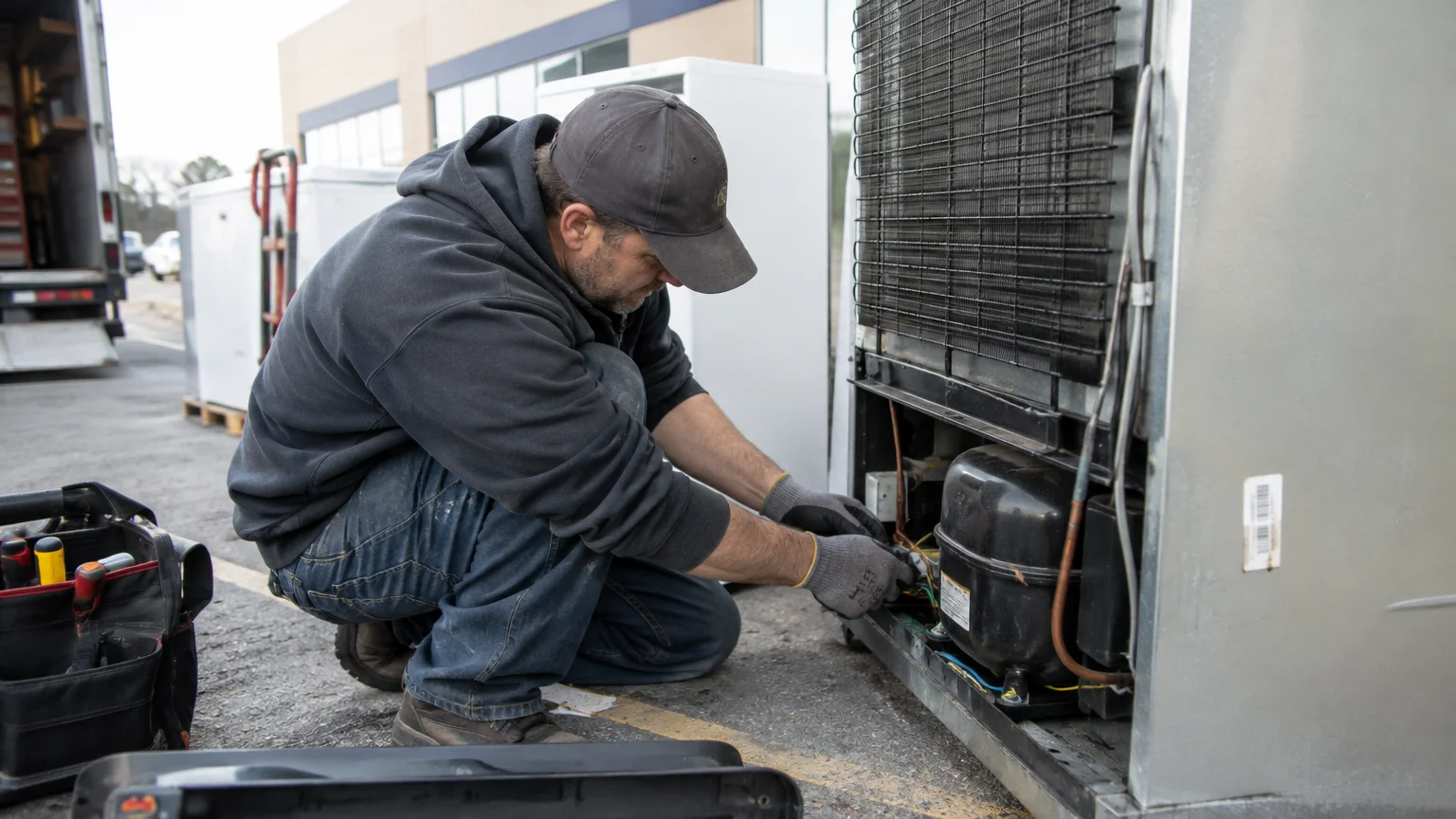
Old appliances may be reusable, recyclable, or subject to special handling. Refrigerators and freezers can contain parts that require careful removal. Do not cut lines or drain equipment unless a qualified person is allowed to do so.
Check local requirements for restricted or hazardous materials
Paint, solvents, cleaning chemicals, batteries, aerosols, and unknown liquids should not go into ordinary junk. Keep labels visible and close containers safely. Never mix chemicals or transfer them into unmarked bottles.
The store manager should ask the landlord and local authority about approved handling. A professional removal company can explain what it accepts and what needs another provider. Clear details prevent unsafe loading and last-minute delays.
In San Luis Obispo, requirements may vary by building and local service area. San Luis Obispo Junk Removal can review the removal list before the planned cleanout so restricted items are found early.
How do you prepare a retail space for junk removal day?
Prepare the space by clearing access routes, confirming building rules, and setting one loading area. The crew needs a safe path from each item to the truck or approved staging area. Good access can make the work faster and reduce damage risks.
Walk the route from the backroom, sales floor, office, and storage areas. Look for narrow doors, steps, elevators, gates, alarms, and shared hallways. Tell the removal team about these details before the appointment.
Clear access routes and coordinate loading areas
Move loose items away from doors and hallways. Keep customers, children, pets, and unrelated staff away from active work areas. Use signs or barriers when the store remains open during part of the cleanout.
Confirm where the truck may park and where items may wait. Some shopping centers limit loading times or require a rear entrance. A property manager may need to reserve a loading zone or protect shared areas.
Do not block fire exits, sidewalks, driveways, or nearby storefronts. The manager should check the route again before the crew arrives because store conditions can change during the final sales days.
Confirm building rules, keys, elevators, and security procedures
Ask who will open the building and who can approve removal work. Confirm keys, access cards, alarm steps, elevator rules, and loading hours. Share these details with the person leading the cleanout.
Some buildings require documents, advance notices, elevator reservations, or insurance papers. Others have rules for noise, parking, debris staging, and cleanup. Confirm these needs early rather than during removal day.
Keep valuable records and personal items in a locked area. Remove cash, payment devices, customer data, and staff belongings before the crew arrives. A final access plan helps the store close with fewer surprises.
What should you check after the retail cleanout is complete?
After the retail cleanout, inspect every room, closet, display area, and loading space. Check for leftover debris, hidden items, damage, and materials that need another disposal path. The final walk-through should happen before keys are returned.
Use the original inventory and photo record during the inspection. Compare what was planned with what actually left the building. This is helpful when several teams worked on the move.
Inspect the space for leftover debris and property damage
Look behind counters, under shelves, inside cabinets, and along stockroom walls. Check ceilings, floors, doors, outlets, and loading areas. Remove loose nails, broken glass, cardboard, and small debris that could cause harm.
Note any damage with photos and written details. Tell the property owner or manager about concerns before repairs begin. If walls need patching or floors need cleaning, add those tasks to the handoff plan.
The goal is a safe, clear space that can be used again. A final sweep also helps prevent disputes about items or damage left behind.
Complete final documentation and prepare the site for its next use
Save the final removal list, photos, recycling or donation records, and property notes. Keep documents in the company file under its record policy. Mark the cleanout complete only after the responsible manager signs off.
Remove temporary signs and barriers. Return keys, access cards, and rented equipment. Make sure utilities, alarms, and building systems are handled by the right person.
For a store move, the team can now focus on the new location. For a closure, the property owner can begin repairs, cleaning, leasing, or another planned use.
Key takeaways
- Start with the move or closure date and work backward.
- Assign one person to each major cleanout task.
- Sort items into keep, donate, recycle, sell, and remove groups.
- Separate electronics, lighting, chemicals, and other restricted materials.
- Protect floors, walls, doors, and shared building areas.
- Confirm access, loading, elevator, and security rules before removal day.
- Complete a final inspection and save the cleanout records.
Frequently Asked Questions
What is a cleanout service?
A cleanout service removes unwanted items from a property and handles approved materials after removal. For a retail store, this may include fixtures, displays, office furniture, boxes, appliances, and general debris. The manager should share a complete item list so the provider can plan safe access and proper handling.
What happens to old appliances from a closed store?
Old appliances may be reused, donated, recycled, or sent to an approved disposal facility. Refrigerators, freezers, and other equipment may need special handling. The store should not cut lines, drain equipment, or mix appliances with ordinary debris unless a qualified person confirms the proper process.
Can a mattress go in a dumpster during a retail cleanout?
A mattress should not automatically go into a dumpster. Rules vary by local authority, building, and waste provider. The manager should ask before disposal and keep the mattress separate until the correct option is confirmed. A removal provider may also explain whether it accepts the item.
How can a business get rid of an old hot tub?
An old hot tub needs planning because it is large, heavy, and often connected to power or plumbing. A qualified person should disconnect those systems. The tub may then be dismantled, recycled in parts, or hauled away through an approved service.
How should a store handle an estate or house cleanout after closing?
A store closure and a house or estate cleanout use similar sorting steps, but the items differ. Separate personal goods, records, furniture, appliances, donations, recycling, and debris. A written list helps the owner choose what stays, while a local cleanout provider can handle approved unwanted materials.
Conclusion
A successful retail cleanout begins before the first fixture moves. Set the timeline, sort every area, record important items, protect the building, and confirm local handling rules. Careful access planning also helps the final removal run in an orderly way.
San Luis Obispo Junk Removal supports commercial cleanout planning for businesses and property owners across the main San Luis Obispo area, from Downtown SLO and Laguna Lake to Pismo Beach, Morro Bay, Atascadero, Arroyo Grande, and nearby communities.
If you are unsure what you are dealing with, it helps to have the item list reviewed before the job grows. Find out more about our commercial junk removal in San Luis Obispo. Contact us today to plan your retail cleanout with San Luis Obispo Junk Removal.