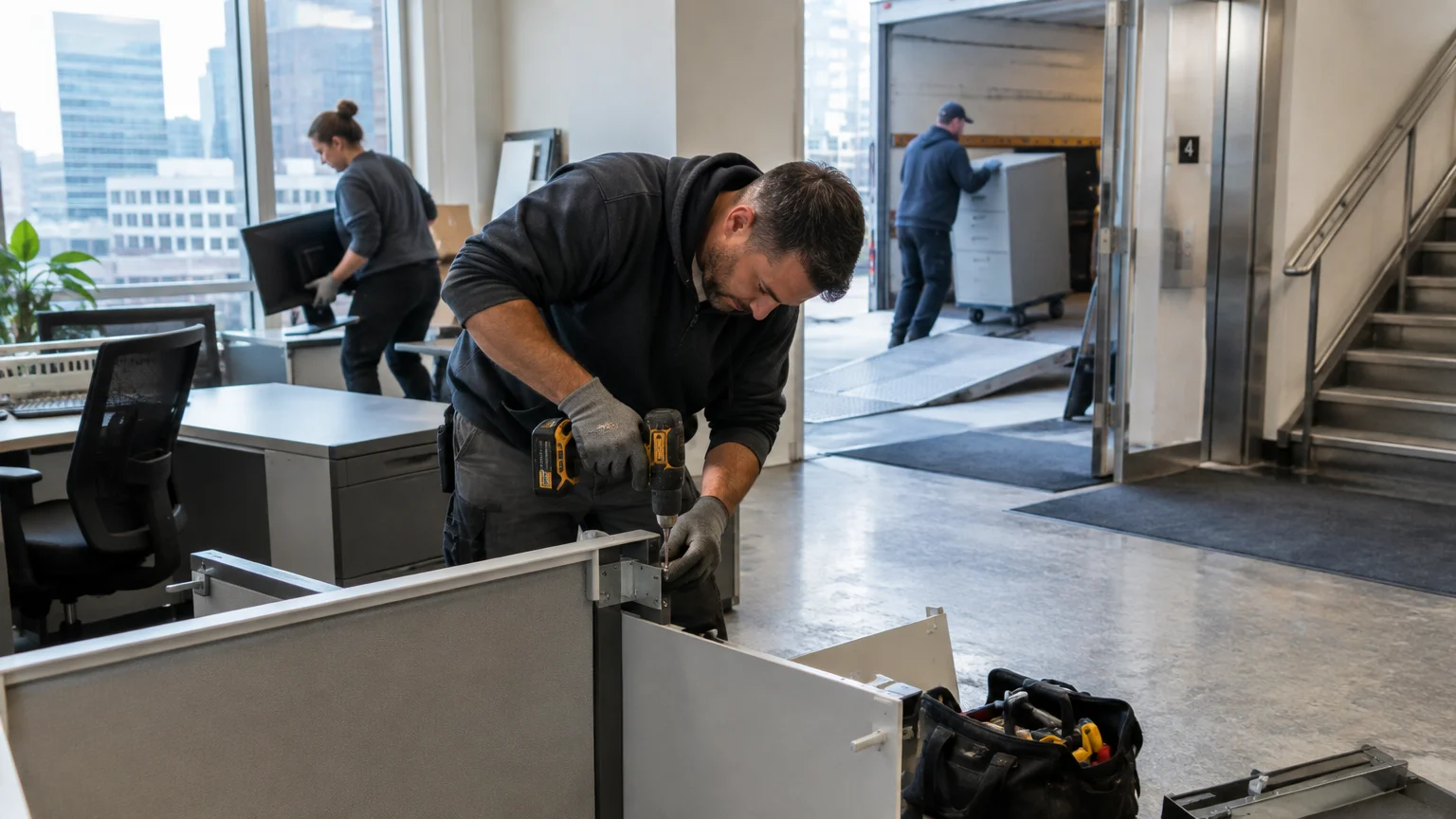
To prepare for an office cleanout, make a removal plan, protect private data, sort items, and tell employees what to expect. Clear paths, marked work zones, and a set pickup time help your team stay on task while desks, cubicles, electronics, and other office junk leave the building safely.
Table of Contents
- How should you plan an office cleanout?
- What should you remove before the cleanout begins?
- How can you protect sensitive business information?
- How do you keep employees productive during an office cleanout?
- What should you know before scheduling commercial junk removal?
- How can you prepare an office for the removal crew?
- What should you do after the office cleanout is complete?
- Key takeaways
- Frequently Asked Questions
- Conclusion
How should you plan an office cleanout?
A good office cleanout begins with a clear plan. Decide what must go, when the work can happen, and who will lead each task. This helps prevent rushed choices and limits the effect on normal business work.
Set clear goals, priorities, and deadlines
Walk through the whole office before making the removal list. Check private offices, open work areas, storage rooms, break rooms, reception areas, and loading spaces. List large items, such as desks and tables, as well as small items, such as lamps, bins, and old supplies.
Separate urgent work from tasks that can wait. A property owner may need an empty suite before a new tenant moves in. A business owner may only need old cubicles removed before a remodel. Clear goals make the deadline easier to set.
A basic cleanout plan can include:
- The rooms and storage areas included in the project
- The furniture, electronics, and debris that must leave
- The items that will stay, be donated, be recycled, or be discarded
- The date when the space must be ready
- The person who will approve final removal choices
Check the lease before moving anything. Some buildings have rules for loading docks, elevators, waste rooms, and work hours. San Luis Obispo Junk Removal can help business owners and property managers review the removal plan before the work begins.
Assign responsibilities to the right team members
Choose one person to lead the project. That person can answer questions, approve unclear items, and work with building staff. Other team members can label furniture, gather records, or prepare electronics. Each task needs a clear owner.
The project lead should keep a simple written list. A shared file or printed checklist can show what is done and what still needs work. This helps when several teams use the same office. It also makes office cleanouts easier to manage from start to finish.
What should you remove before the cleanout begins?
Before the cleanout starts, identify unwanted furniture, equipment, supplies, and general office junk. Separate useful items from things that need removal. Sorting first saves time and lowers the chance of sending away something important.
Identify desks, cubicles, furniture, and general office junk
Walk through the space with a paper list or phone checklist. Mark desks, chairs, cubicle panels, filing cabinets, shelves, tables, reception furniture, and broken fixtures. Check closets and storage rooms too. Boxes, worn carpet pieces, broken fans, and old signs can add up fast.
Large furniture may need partial disassembly. Do not take items apart unless someone can do it safely without harming the building. Heavy cabinets and awkward desks can hurt workers or damage walls, doors, and floors when moved without the right tools.
The list may also include:
- Broken office chairs and unused desks
- Old cubicle panels and workstations
- Shelves, cabinets, and conference furniture
- Damaged break room appliances
- Cardboard, packing material, and loose debris
- Outdated equipment the business no longer needs
A cleanout service removes unwanted items from a property and handles them through the next proper step. That step may be reuse, recycling, donation, or disposal. Ask what the provider accepts before setting the appointment.
Separate items for reuse, recycling, donation, or disposal
Mark areas for items that will stay and items that will go. Reusable desks or chairs may help another department. Working furniture may also help a local nonprofit or another business. Keep broken items apart from goods that can still be used.
Appliances need extra care. A refrigerator, microwave, or water cooler may contain parts that should not enter regular trash. Businesses asking how to dispose of appliances should check local rules and provider policies. The same care applies when deciding how to get rid of an old fridge.
Do not place paint, chemicals, pressurized containers, medical waste, or other regulated materials with normal office junk. Ask the proper local authority or a qualified handler about these items. This keeps workers, building staff, and the removal crew safer.
How can you protect sensitive business information?
Secure private information before an office cleanout begins. Paper records, computers, storage devices, and labels may reveal private details after a business stops using them. A good plan includes data protection as well as furniture removal.
Handle paper records and confidential materials securely
Check file cabinets, desks, drawers, printers, and storage boxes. Remove records that must be kept, then follow the company retention policy for the rest. Documents with customer details, employee data, financial records, passwords, or legal information need careful handling.
A normal office cleanout is not the same as certified document destruction. If records need shredding or another secure process, use a provider that clearly offers it. Never leave private papers in an open hall, shared waste room, or unlocked loading area.
Before removal, check whiteboards, bulletin boards, labels, and notes. These may show passwords, phone numbers, project names, or customer details. Erase private information and remove labels from boxes, computers, and file cabinets.
Prepare computers, hard drives, and other electronics for removal
The technology team should handle computers and storage devices. Team members can back up needed files, remove accounts, sign out of services, and follow the company data-wiping policy. Simple deletion may not remove all data from a hard drive, so use the approved company process.
Electronics may include monitors, printers, phones, routers, cables, servers, and battery devices. Keep these items in a separate area. Electronic waste may need recycling through a proper program instead of normal disposal. The Environmental Protection Agency provides guidance on responsible reuse, refurbishment, and recycling of used electronics through its electronics donation and recycling guidance.
The removal crew should not decide whether a computer still holds company data. That choice belongs to the business. After the technology team signs off, list the items for removal.
How do you keep employees productive during an office cleanout?
Employees work better when they know what will happen and when. Send a short plan that explains the schedule, affected areas, safety rules, and changes to daily work. Early notice helps staff avoid active work zones and reduces questions during the cleanout.
Create a clear communication plan for your team
Send the first notice early enough for employees to save files, remove personal items, and clear their desks. Explain which items belong to the company and which items employees must take home. Send a final reminder before work starts.
The message should list the date, work areas, access limits, and project lead. Employees should know where to report a problem. They should also know not to move heavy furniture or enter a marked work zone without approval.
Managers can use a short checklist:
- Tell employees which rooms will close and when
- Ask staff to remove personal items before the deadline
- Explain where temporary work areas will be located
- Share rules for halls, elevators, and loading areas
- Provide one contact for cleanout questions
Use phased scheduling, temporary work areas, or remote work
A phased cleanout handles one area at a time. This works well when the office must stay open. The team might clear storage rooms first, then unused offices, and later shared work areas. This limits noise and keeps more desks available.
Temporary work areas can help employees whose desks are being removed. Remote work may also help during a large move, remodel, or building change. The best choice depends on the company, building, and type of work.
San Luis Obispo Junk Removal can help San Luis Obispo businesses plan a removal window that fits the site. The business should still choose the final schedule based on staff needs, customer access, security, and building rules.
What should you know before scheduling commercial junk removal?
Before scheduling commercial junk removal, document the items, access points, and site conditions. Good details help the provider understand the job and reduce delays. The plan should also follow the property’s rules.
Document the items, access points, and site conditions
Make an inventory of everything that must leave. Include the size and number of large items, the amount of loose debris, and anything needing special handling. Photos can show tight corners, stairs, elevators, narrow doors, or long paths to the loading area.
Note whether the crew will work inside an occupied building. List floor protection needs, security desks, parking limits, and restricted areas. If the office is in a shared property, tell building staff in advance.
Good details include:
- The floor or suite where items are located
- Stairs, elevators, ramps, and door widths
- Loading dock rules and vehicle access
- Items that need disassembly or careful handling
- Materials the provider cannot accept
Confirm timing, loading instructions, and property requirements
Confirm the arrival window and expected work order. The business should ask who will provide access and who can approve changes. It should also confirm parking instructions, elevator access, and loading dock reservations.
Property managers may require proof of insurance, work-hour limits, floor protection, or a certificate of insurance. Rules vary by building. Get these details before the appointment instead of during the cleanout.
For local service, businesses can review how San Luis Obispo Junk Removal serves San Luis Obispo and nearby communities. Clear planning helps the provider arrive ready and helps the office avoid preventable interruptions.
How can you prepare an office for the removal crew?
The office should be ready before the crew arrives. Clear paths, open work zones, and confirmed building access help the work move smoothly. Employees should stay outside the active work area unless they have a specific task.
Clear pathways, elevators, loading zones, and work areas
Remove boxes, cords, decorations, and loose items from the route. Keep halls and doors open where allowed. Protect items that will stay, including glass walls, finished floors, displays, and nearby equipment.
Do not block fire exits or safety equipment. The Occupational Safety and Health Administration provides guidance on keeping exit routes free and usable in its emergency exit route information. The business should also follow the building’s own safety rules.
Mark items that must stay. A bright label or separate room can prevent mistakes. Keep personal property, active equipment, and important records away from the removal area.
Coordinate with property managers, security, and building staff
Building staff should know the date, crew access plan, and areas involved. Security may need a guest list or loading instructions. The property manager may need to unlock service doors or reserve an elevator.
The project lead should remain available during the work. If the crew finds an item that was not on the list, the lead can decide what to do. This keeps employees from making separate choices and helps protect the schedule.
Businesses in California and throughout the San Luis Obispo area may face different building rules. Checking early can prevent a blocked entrance, missed elevator window, or avoidable delay.
What should you do after the office cleanout is complete?
After the cleanout, compare the space with the original plan. A final walk-through helps confirm that the right items left and that the office is safe and ready for use.
Inspect the space and confirm that all planned items were removed
Check every room, closet, cabinet, and storage area. Look behind doors and under work surfaces. Make sure planned desks, cubicles, appliances, electronics, and debris are gone. Also check that items marked to stay remain in place.
Look for blocked paths, loose wires, wall damage, floor marks, or debris left behind. Report building damage promptly to the property manager and removal provider. Keep completion notes, photos, and paperwork with the project record.
If the office was part of a move or remodel, confirm that the space meets the next project’s needs. An open room may still need repairs, painting, cable work, or deep cleaning.
Organize the remaining office and document the completed cleanout
Return needed furniture and supplies to their planned places. Label storage areas and remove old signs. Update the business asset list so future teams know what remains and where it is stored.
The project lead should record what was reused, donated, recycled, or removed. This creates a useful record for the next office change. It can also help the business improve its cleanout process.
A final review may show related needs, such as appliance disposal, warehouse debris removal, or a future property cleanout. Plan those tasks separately so the current project stays clear and controlled.
Key takeaways
- Plan the cleanout first: List rooms, items, deadlines, and responsible team members.
- Protect private information: Secure paper records, computers, hard drives, and labels before removal.
- Sort items clearly: Separate reusable, recyclable, donated, and disposable materials.
- Protect productivity: Use clear notices, phased work, temporary areas, or remote work.
- Prepare the building: Confirm access, elevator use, loading rules, security needs, and property requirements.
Frequently Asked Questions
What is a cleanout service?
A cleanout service removes unwanted items from a home, office, or commercial property. Items may include furniture, appliances, equipment, boxes, and general debris. The provider may sort materials for reuse, recycling, donation, or disposal. Confirm accepted materials and building rules before scheduling commercial junk removal.
How early should a business plan an office cleanout?
Start planning as soon as the target date is known. Large offices, occupied buildings, and projects with many electronics need more planning. Early work gives employees time to remove personal items. It also gives property managers time to approve elevators, loading zones, and work hours.
Can a business leave computers and hard drives for removal?
Yes, but the company should prepare them first. The technology team should back up needed files, remove accounts, and follow the approved data-wiping process. A removal provider should not decide whether a device contains private information or is ready for disposal.
How should a business dispose of an old refrigerator or appliance?
First, check local rules and the provider’s accepted-material policy. Refrigerators and other appliances may need special handling because of refrigerants, batteries, or electrical parts. Do not place them in normal office trash unless the proper authority or provider approves that method.
Can office furniture removal happen while employees are working?
It can, but phased scheduling is often easier for an active office. Clear unused rooms first, then move through shared areas during quieter times. Barriers, staff notices, and a planned route help protect employees and keep the work organized.
Conclusion
A well-planned office cleanout does not need to stop the whole team. Sort items, protect data, share a clear schedule, and prepare the building before removal day. A written plan also helps property managers and removal crews work from the same information.
For help planning an office cleanout, Contact us to discuss your removal needs with San Luis Obispo Junk Removal.
If you are not sure what you are dealing with, it is worth having someone look at it before it turns into a bigger job. Get in touch with San Luis Obispo Junk Removal today and we will tell you where you stand.