Eco-friendly appliance disposal helps keep useful materials out of landfills and handles risky parts with care. It may include donation, repair, metal recycling, plastic recovery, and safe refrigerant handling. San Luis Obispo Junk Removal helps homeowners, landlords, and business owners plan appliance removal in a safe and responsible way.
Old appliances can be heavy, hard to move, and awkward to carry. They may also contain parts that should not go into regular trash. A refrigerator, washer, dryer, stove, or dishwasher needs the right plan before pickup.
Table of Contents
- What Does Eco-Friendly Appliance Disposal Mean?
- How Are Refrigerators Prepared for Eco-Friendly Disposal?
- Can Washers, Dryers, and Dishwashers Be Recycled?
- What Happens to Stoves and Other Large Appliances?
- What Appliance Disposal Rules Should Homeowners Know?
- How Can You Choose a Responsible Appliance Pickup Service?
- Key Takeaways for Eco-Friendly Appliance Disposal
What Does Eco-Friendly Appliance Disposal Mean?
Eco-friendly appliance disposal means handling an old appliance so useful items, recyclable parts, and harmful materials get proper care. The goal is not only to move the appliance away. The goal is to find the safest and most useful next step.
How appliance disposal differs from ordinary junk removal
Ordinary junk removal often includes many types of unwanted items. Appliance removal needs more planning because appliances are large, heavy, and made from many materials. Some also contain refrigerants, oils, batteries, wires, or electronic controls.
A responsible crew first checks the appliance and its condition. A working refrigerator may be ready for reuse or donation. A damaged washer may provide useful parts. A broken appliance may go to a recycling center that separates metal, plastic, glass, and wires.
This process differs from leaving an appliance near the road. It also differs from placing one in a household bin. Those choices can create safety risks and may break local collection rules. They can also send useful materials to a landfill.
Why responsible handling matters for materials and the environment
Many appliances contain steel, copper, aluminum, glass, and strong plastics. Recycling gives these materials another use. It also reduces the need for new raw materials. Reuse may help even more when an appliance is safe, clean, and still works well.
San Luis Obispo Junk Removal can help property owners sort through these choices before removal. The right plan depends on the appliance, its condition, its size, and local rules. A clear plan can also help prevent damage to floors, walls, doors, and nearby property.
How Are Refrigerators Prepared for Eco-Friendly Disposal?
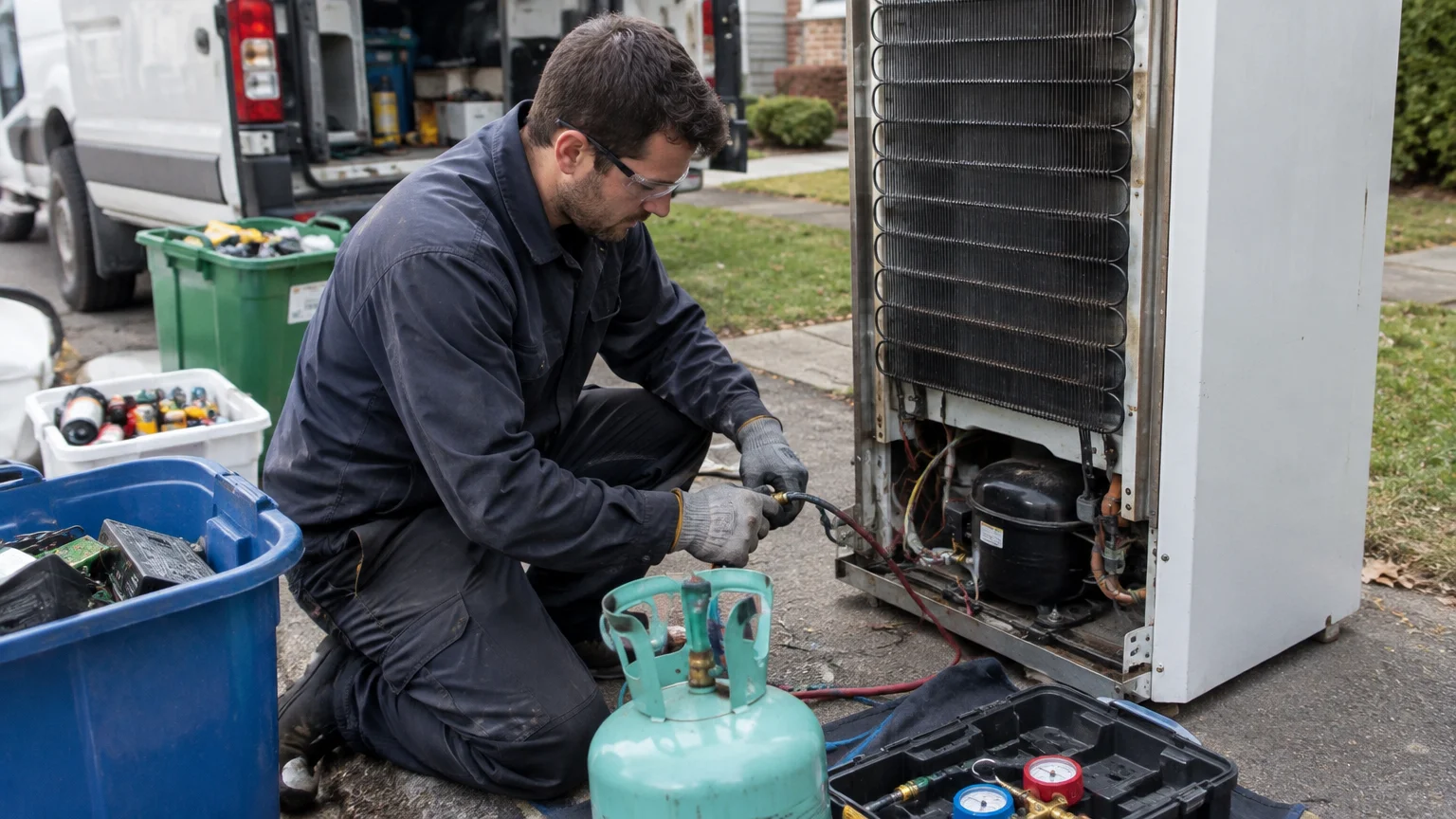
Refrigerators need special care because their cooling systems contain refrigerant. Refrigerant is a chemical that moves heat from inside the refrigerator to the outside. Local guidance should be checked before the appliance is taken apart or recycled.
Refrigerant recovery and safe removal
A homeowner should not cut cooling lines, puncture a compressor, or release refrigerant. These actions can hurt people, damage tools, and let refrigerant escape. Keep a refrigerator upright when possible, and secure its doors during movement.
Before pickup, the owner can remove food, shelves, bins, and loose items. Wiping the inside can help reduce odors and mold. The appliance should then be unplugged according to the provider’s instructions. If it has a water line or ice maker, that line needs careful handling.
A qualified recycling partner can recover the refrigerant. The partner can also manage the compressor, oils, and other cooling parts. The outer cabinet can then enter a separate recycling process. This is why refrigerator removal is not the same as regular household waste collection.
Recycling metal, plastic, glass, and electronic components
After safe preparation, a refrigerator may be taken apart for material recovery. Steel cabinets, copper tubing, aluminum parts, glass shelves, plastic bins, and wires may be sorted. Electronic control boards may need a special recycling stream.
Not every part can be reused. Dirt, damage, mixed materials, and contamination may limit recovery. Careful sorting can still offer a better result than placing the whole refrigerator in a landfill.
A refrigerator that still works may be ready for donation or reuse. The receiving group may check its age, condition, energy use, and safety. San Luis Obispo Junk Removal can explain the possible removal path for homeowners and landlords.
Can Washers, Dryers, and Dishwashers Be Recycled?
Yes, washers, dryers, and dishwashers can often be recycled, repaired, donated, or used for parts. Their final path depends on their condition, age, cleanliness, design, and local facility rules. Most contain a large amount of useful metal.
Which parts are commonly recovered and reused
Washers and dryers often contain steel frames, drums, motors, wires, aluminum, and copper. Dishwashers may contain stainless steel, plastic panels, pumps, heating parts, and electronic controls. Some parts can support repairs. Others can be processed as scrap material.
A working appliance may have a better next use than a broken one. A donation group, repair shop, or reuse center may accept it after checking its safety and condition. Owners should share details about leaks, noise, rust, missing parts, and other faults.
Dryers need extra care because lint and heat damage can create safety risks. A dryer that has stopped working should not be connected or tested by someone without the right skills. The same applies to washers with water leaks or damaged power cords.
How appliances are separated at recycling facilities
At a recycling facility, workers or machines may separate large metal pieces from plastic, wires, glass, and small parts. Some appliances are compacted or shredded only after liquids, harmful parts, and electronic items are removed.
Before pickup, owners can empty pockets, remove loose racks, and clean visible food or dirt. They should not take apart motors, sealed systems, or wires without the right training. Taking apart a heavy appliance can cause cuts, strains, electric shock, or crushed fingers.
A service that handles washer and dryer pickup should explain where appliances go after collection. San Luis Obispo Junk Removal can help customers review removal options for homes, rentals, offices, and renovation projects across the San Luis Obispo area. This includes Downtown SLO, Laguna Lake, Pismo Beach, Morro Bay, Atascadero, Arroyo Grande, and nearby communities.
What Happens to Stoves and Other Large Appliances?
Stoves, ranges, ovens, and similar appliances may be donated, repaired, recycled, or handled through an approved facility. The safest choice depends on whether the unit uses gas or electricity, whether it works, and how it is connected.
Preparing gas and electric appliances for pickup
Gas appliances should be disconnected by a qualified person when needed. The gas supply must be shut off, and the connection should be checked for safety. A homeowner should never cut a gas line or move a connected range through a doorway.
Electric stoves can also be hard to move. Some use a high-voltage connection, so the power should be disconnected safely before handling. A damaged cord, hot surface, or broken control can create a risk during removal.
Owners can clear cookware, racks, trays, and loose items before pickup. They can also measure narrow doors and hallways. This simple check helps the crew plan a safe route and protect walls and floors.
Donation, refurbishment, recycling, and disposal options
A clean, working stove may be accepted by a reuse group or donated to a household in need. A repair shop may fix certain models. Appliances that cannot be reused can often be separated for metal recovery.
Dishwashers, ranges, and other large units may contain mixed materials. Their recycling path may include steel, copper, aluminum, wires, glass, and plastic. Parts with grease, damage, or contamination may need special handling.
The same basic idea applies to other bulky items, including hot tubs. A hot tub may need draining, disconnection, cutting, and material sorting. It should not be treated like a small appliance. For any large item, a removal service can review access, weight, connections, and safe handling before pickup.
What Appliance Disposal Rules Should Homeowners Know?
Appliance disposal rules vary by state, county, city, facility, and appliance type. Refrigerants, electronics, oils, batteries, and gas connections may have separate handling rules. Homeowners should check local guidance or ask the pickup provider which rules apply.
Local requirements for refrigerants, electronics, and hazardous components
A refrigerator or freezer may need refrigerant recovery before recycling. Electronic controls and circuit boards may need an electronics recycling stream. Batteries, oils, cleaning chemicals, and damaged parts should not be mixed with regular household waste.
Rules may also apply to curbside placement, bulk collection, transfer stations, and landfill acceptance. Some communities require appointments or limit the appliances they collect. A private facility may have its own preparation rules as well.
Homeowners should keep manuals, model details, and proof of ownership when useful. They should also tell the service about leaks, broken glass, sharp edges, pests, or unusual access. Clear details help prevent delays and unsafe surprises.
Why disposal rules can vary by appliance and location
A refrigerator has different risks from a dishwasher. A gas range has different connection needs from an electric dryer. Local agencies may also use different systems for bulky items and recyclable materials.
Advice from another city may not apply in San Luis Obispo. San Luis Obispo Junk Removal can help property owners understand practical steps for appliance removal in the local service area. The provider should still follow current facility rules and send regulated items to the proper handler.
A homeowner does not need a professional for every task. Emptying an appliance, cleaning it, measuring doorways, and removing loose shelves are usually simple tasks. Professional help is safer for gas lines, sealed cooling systems, high-voltage wires, heavy lifting, stairs, and tight spaces.
How Can You Choose a Responsible Appliance Pickup Service?
A responsible appliance pickup service explains how it handles reuse, recycling, donation, and disposal. It should also ask about the appliance, access, connections, and possible hazards. Clear answers help owners choose a safer removal plan.
Questions to ask about recycling, donation, and disposal practices
Before scheduling, a homeowner can ask:
- Does the service sort appliances for reuse and material recovery?
- How are refrigerators and freezers handled before recycling?
- Are working appliances considered for donation or repair?
- Which appliances does the receiving facility accept?
- How should gas, water, electric, and cooling connections be handled?
- What should the homeowner remove before the crew arrives?
The service should avoid vague promises. It should explain that the final result depends on appliance condition and facility rules. A working appliance may be reused, while a damaged unit may be taken apart for materials.
What to expect when scheduling appliance removal in San Luis Obispo
During scheduling, the owner should share the appliance type, size, location, condition, and access route. Photos may help the provider understand stairs, narrow doors, elevators, gates, or other limits. The owner should mention if the appliance is connected or leaking.
On pickup day, the area should be clear of loose objects, children, and pets. The crew may protect floors and guide the appliance through the property. The owner should not help lift unless the crew says it is safe.
San Luis Obispo Junk Removal serves customers across the San Luis Obispo area. The team can help plan removal for homes, rental properties, offices, and renovation sites. Responsible service means more than quick loading. It means choosing a sensible next step for the appliance and its materials.
Key Takeaways for Eco-Friendly Appliance Disposal
Eco-friendly appliance disposal starts with sorting. A working appliance may be reused or donated. A broken appliance may be repaired, stripped for parts, or sent to a recycling facility. Refrigerators need special attention because refrigerant must be recovered safely.
A practical preparation checklist for refrigerators and other appliances
- Empty the appliance and remove loose shelves, racks, and bins.
- Unplug electrical units only when it is safe to do so.
- Do not cut gas lines, cooling lines, cords, or sealed systems.
- Tell the provider about leaks, damage, stairs, and tight access.
- Keep doors and walkways clear before the removal team arrives.
- Ask how reusable materials and regulated parts will be handled.
These steps help protect people, property, and the environment. They also make pickup easier for large appliances that are hard to move through a home or business.
When professional removal is the safer and more convenient option
A homeowner usually does not need professional help to clean an appliance or remove loose items. Professional removal is a better choice when the unit is heavy, connected, leaking, damaged, upstairs, or hard to move. Trained crews can also help reduce strain and property damage.
The best disposal path depends on the appliance and its condition. A careful service can connect reuse, donation, recycling, and proper disposal steps. Contact us today to arrange responsible appliance removal.
Key takeaways:
- Refrigerators need safe refrigerant handling before recycling.
- Washers, dryers, dishwashers, and stoves often contain useful materials.
- Gas, electrical, cooling, and hazardous parts need careful handling.
- Local rules can differ by appliance and location.
- A responsible pickup service explains where each appliance goes.
Frequently Asked Questions
How can someone get rid of an old refrigerator?
An old refrigerator can go to a reuse group, appliance recycler, or removal service. The cooling system should not be cut or damaged. The refrigerator should be emptied and kept secure until pickup. A qualified handler can recover refrigerant and send the metal, plastic, glass, and wires through proper channels.
Can a washer and dryer go in regular trash?
Large washers and dryers usually need bulk collection, a recycling facility, or an appliance removal service. Regular household bins are not made for their weight or mixed materials. Before pickup, owners should empty the machines, remove loose items, and report leaks, damage, stairs, or tight access.
Is eco-friendly appliance disposal available for broken appliances?
Yes, broken appliances may still have useful metal, wires, plastic, glass, or parts. A facility will decide what can be recovered after checking the appliance. Eco-friendly appliance disposal does not mean every piece will be reused. It means the appliance receives a safer and more suitable handling path.
Should a homeowner disconnect a gas stove before removal?
A homeowner should follow local safety rules and use a qualified person when gas disconnection is needed. Gas lines should never be cut or forced apart. The removal provider should know that the stove uses gas before pickup. This allows the job to be planned around safe disconnection and movement.
What happens to appliances after pickup?
The next step depends on condition, age, safety, and facility rules. Working units may be donated or repaired. Other units may be taken apart for steel, copper, aluminum, plastic, glass, wires, and parts. Refrigerators may need refrigerant recovery before recycling. Some damaged materials must go to special handling facilities.
If you are unsure what you have, a removal provider can review the item and its handling needs. San Luis Obispo Junk Removal can help arrange the next step.
If you are not sure what you are dealing with, it is worth having someone look at it before it turns into a bigger job. Get in touch with San Luis Obispo Junk Removal today and we will tell you where you stand.